
Most people dress for the parking lot. They put on everything they own, start walking, and ten minutes later they are sweating. Off comes a layer. Now the damp shirt underneath meets the wind, and they are wet and cold at the same time, which is worse than either one.
A warning first: I run hot. I am in shorts and a T-shirt until it gets down to about 40°F, and that is why I love a cold morning. So my numbers are not your numbers. But when I do have to layer up, I do it properly, and the way I do it works whatever your numbers are.
I walk at sunrise most weekends and log every morning, with the weather for each one. So this is less about what the catalogs say and more about what 31 winter mornings in Georgia actually were, and what I wear for them.
What a winter morning here is
Between December and February I have been out at sunrise on 31 logged mornings. The temperature at sunrise on them:
It does not hold still. The biggest drop between two winter mornings no more than eight days apart: 63°F on February 9, 2025, then 43°F 6 days later. The biggest rise: 43°F on February 1, 2025 to 61°F on February 8, 2025. From one winter morning in the log to the next, the temperature at sunrise moved by a median of 11°F.

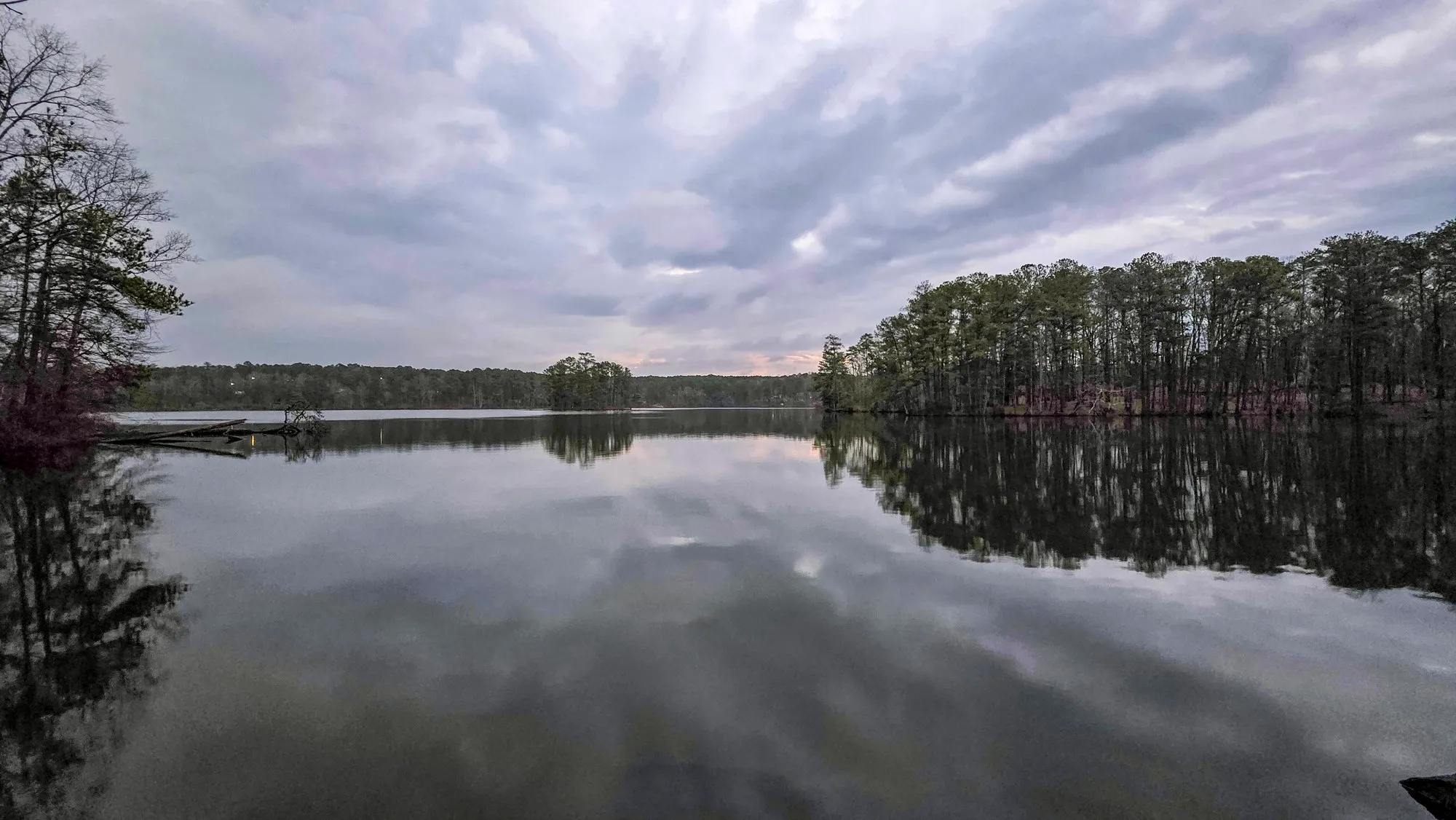
So there is no winter outfit here. There is a system, and it has to cover 35 degrees. November needs the same system: my November sunrises ran from 31°F to 64°F.
The air will not warm you
I start at first light, a median 2 minutes after civil dawn and 26 minutes before sunrise. You would expect the morning to warm up around you. It barely does. My 23 recorded winter walks, start to finish:
On 18 of the 23, the air kept cooling for a while after I set off (by about 0.5°F in the median), so the coldest air of the walk came after the start.
The cold starts, the 12 walks in any month that set off at 40°F or under, warmed by a median of 4.6°F over a median walk of 3 hours 22 minutes. Cold starts that ended colder: none.
That changes the question. The heat I have to manage is almost all my own. My legs make it, and the weather hands me very little. Everything below is about getting rid of that heat before it turns into sweat, and keeping it when I stop.
Feels like
It feels colder than it is. At the start of a winter walk, the weather archive’s “feels like” temperature, its blend of wind chill, humidity and sunshine, was a median of 6°F under the air temperature. The coldest start in the log, on January 30, 2026, was 28°F and felt like 22°F.1
Start cold
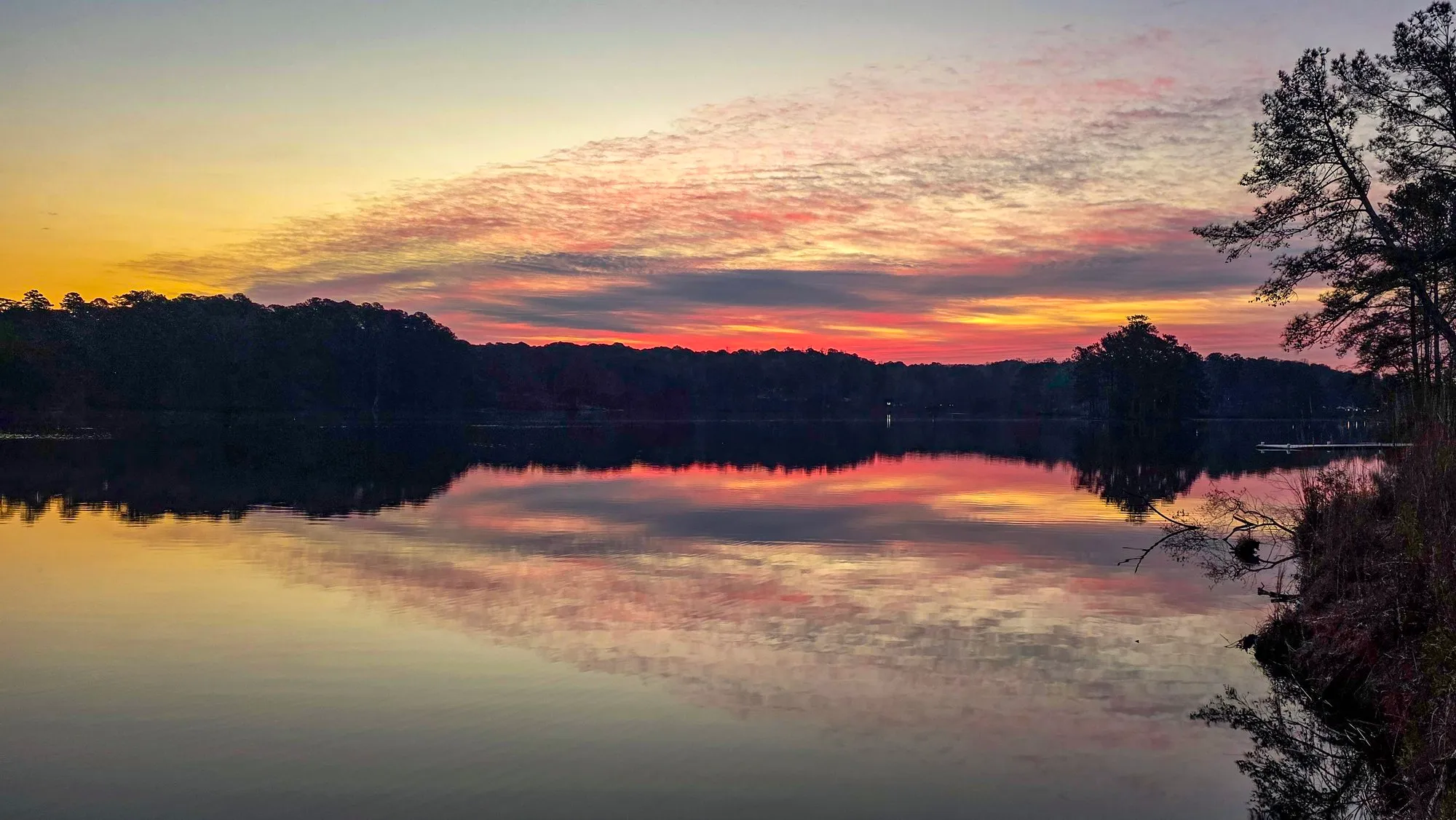
There is an old hiking saying: be bold, start cold.2 Dress so that you are a little cold standing at the car, because once you are walking you will not be. The US Army’s cold-weather manual says the same thing its own way: add or remove layers to stay cool to comfortable, because working hard in clothes chosen for standing still is how the sweating starts.3
My warm-up is the loop around Indian Island, where I park. It is flat and short, and it ends back at the car. On a cold morning the hoodie comes along for it, and by the time I am back at the car I am warm and it stays there. On the 22 winter walks I started from the island, I was off the island a median of 21 minutes after setting off, 0.86 miles in, and on 15 of them I came back past the car first, a median of 22 minutes in.
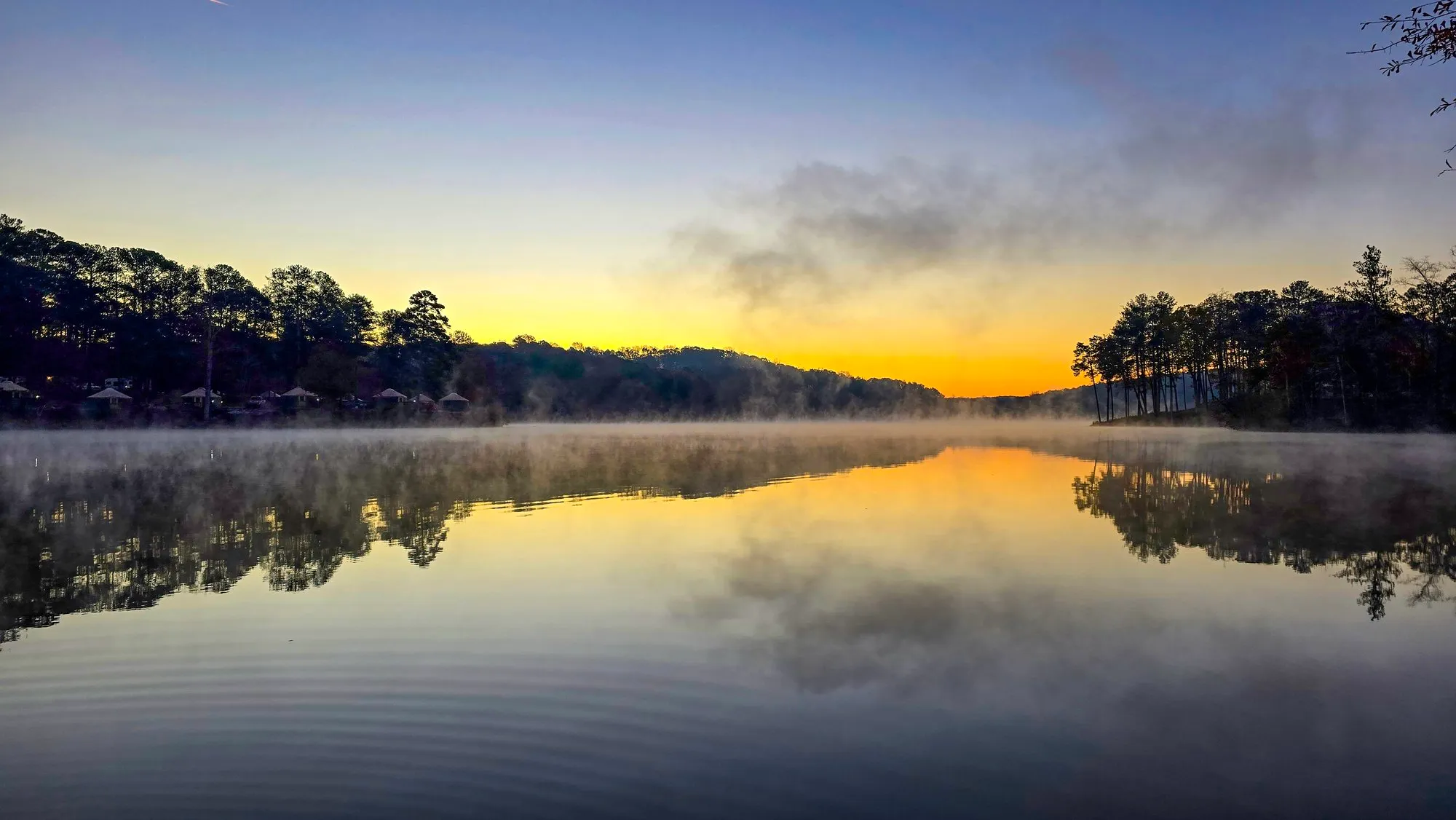
Sweat is how the body sheds that heat. Every gram that evaporates carries away about 2.4 kilojoules, which is why it works so well while you are moving.4 The trouble is that a wet layer keeps cooling you after you stop: in a lab at 50°F, people resting in wet underwear cooled significantly more than in dry.5
One job per layer
The layers are not about thickness. Each one has a job.2
- Base layer: against the skin. Its job is to move sweat away from you, not to be warm. Mine is a Merino.tech short-sleeve tee, all merino, and Smartwool Active briefs, 56 percent merino with a windproof front panel.27
- Middle layer: holds warm air. For me that is the Columbia Steens Mountain vest, a polyester fleece, which goes on at about 40°F. Under about 35°F, or when it is windier than usual, the Skechers Hoodless Hoodie, a full-zip jacket, comes along for the first loop, and on the worst mornings the vest goes over it: that is how I keep my core warm when it is really windy and really cold.27
- Shell: stops the wind. I do not own a real one. The hoodie stays in the car once I am warm, and the vest, the beanie and the gloves are what I wear to the top, where the wind is. Fleece does not stop wind, so up there that is the gap in my system.
- The ends: head, hands and feet. They are the easiest pieces to take off and put back on, so they are the fastest way to adjust. The beanie goes on with the vest at about 40°F; the glove liners come out under about 35°F, in wind, or for the top. Hands are worth the gloves: in an Army study, people sitting still for an hour in soaked uniforms at 41°F kept their core temperature, but their fingers cooled by about 36°F.6 Mine are a MERIWOOL beanie (half merino, half acrylic), MERIWOOL glove liners with touchscreen fingertips (65 percent merino), and Darn Tough Hiker Quarter socks in midweight cushion (59 percent merino).27
- Legs: NORTHYARD running shorts, polyester, until it drops below freezing. Then always the Icebreaker Shifter pants, a merino blend.27
- One more, for sweat: MANSCAPED’s Crop Preserver, against chafing.
Cotton is rotten
A trail runner friend of mine said this years ago, and it has held up. Hikers have a harsher version: cotton kills.2
Cotton is thirsty. In the cotton industry’s own test, plain cotton jersey soaked up about four times its weight in water.7 It dries slower than polyester.8 And a wet layer loses much of its warmth: the Army puts a soaked cotton-nylon uniform at half its dry insulation or less.3 Part of that is the water itself, which conducts heat about 23 times better than air;9 more of it is evaporation pulling heat out of you through the wet fabric.10
That is not an exaggeration for the temperatures here. The CDC says hypothermia can happen “even at cool temperatures (above 40°F)” if you get chilled from rain, sweat or cold water.11
Can the cold give you a cold?
What being cold will not do by itself is give you a cold. Colds are caused by viruses, more than 200 kinds of them.12 There is some evidence that cold weakens the nose’s defenses. In the lab, nasal tissue cooled by 9°F, the drop measured in volunteers’ noses after 15 minutes of 40°F air, released about 42 percent fewer of the tiny vesicles it uses against viruses.13 In one small trial, people whose feet were chilled in cold water reported colds more often over the next five days: 13 of 90, against 5 of 90 who kept their feet dry. Nobody in that trial was tested for a virus.14 So keep your head covered, but the thing to worry about on the trail is simpler: wet plus wind is how you get too cold.
I am not a purist. My hoodie is more than half cotton, by its listing.27 It sits over the merino, never against my skin, I do not wear it often, and it rarely lasts past the loop around the island before it goes back in the car.
Not grandma’s sweater
When people hear wool they think of the itchy sweater from the Christmas photo. That itch is real, and it is not an allergy.15 It is fiber ends too thick to bend when they press on the skin: above about 30 microns they push hard enough to fire the skin’s pain nerves.16 The wool trade treats a fabric as likely to prickle once more than about 5 percent of its fibers are over 30 microns.17
Coarse wools from breeds like Romney and Lincoln run 30 to 41 microns and go into carpets, socks and hand-knitting yarn.18 Merino for base layers is usually finer than 19.5 microns,19 and Icebreaker lists 15.5 and 17.5 microns for its own.20 The listing for my own tee says 17.5 microns.27 Not every hand-knit sweater was coarse wool, but the scratchy ones had coarse fibers in them.
What it does better:
- It takes up sweat as vapor. At ordinary humidity, wool holds about twice as much water vapor as cotton: 13.6 percent of its weight against 7 to 8.5 percent, by the textile trade’s standard figures.21 Water held inside a fiber chills the skin less on contact than water sitting in the fabric.22
- It gives off a little heat as it takes up moisture, a few degrees at the fabric in lab tests. It is a buffer, not a heater: the heat goes back out when the fabric dries.23
- It holds less body odor than polyester. Cotton does about as well, so this is a point against synthetic base layers, not against cotton.24
- It felt warmer after the work. In one small study, men who sat in a breeze after exercise rated a wool shirt warmer and more comfortable than cotton, viscose or polyester. The study was funded by the wool industry, and their skin temperatures differed less than their ratings did.25
You will read that merino holds a third of its weight in water before it feels wet. It can hold about that much near saturation,23 but I could not find a study behind the “feels wet” part, so I am not repeating it.
Where it loses:
- It wears out. Wool is less abrasion resistant than nylon,17 which is why Smartwool and Icebreaker both wrap merino around a nylon core in some of their lines.26
- It dries slower than polyester, at least in lab tests.8
- Soaked through, it is no miracle. When fabrics are equally wet, thickness matters more than fiber.5
- It costs more.17
Is it worth the price? For me, yes. The comfort and how fast it dries on me are an absolute godsend. I got caught in the rain once and got quite wet, and ten minutes after the rain stopped I was dry. Another morning I slipped a foot into the water, and ten or fifteen minutes later that foot was dry, in a merino sock, while I kept walking. I would not have bet on a cotton sock doing that. Polyester may dry faster on a lab rack, but on me, walking, thin merino was dry in minutes.
Vent early, cover up before you stop
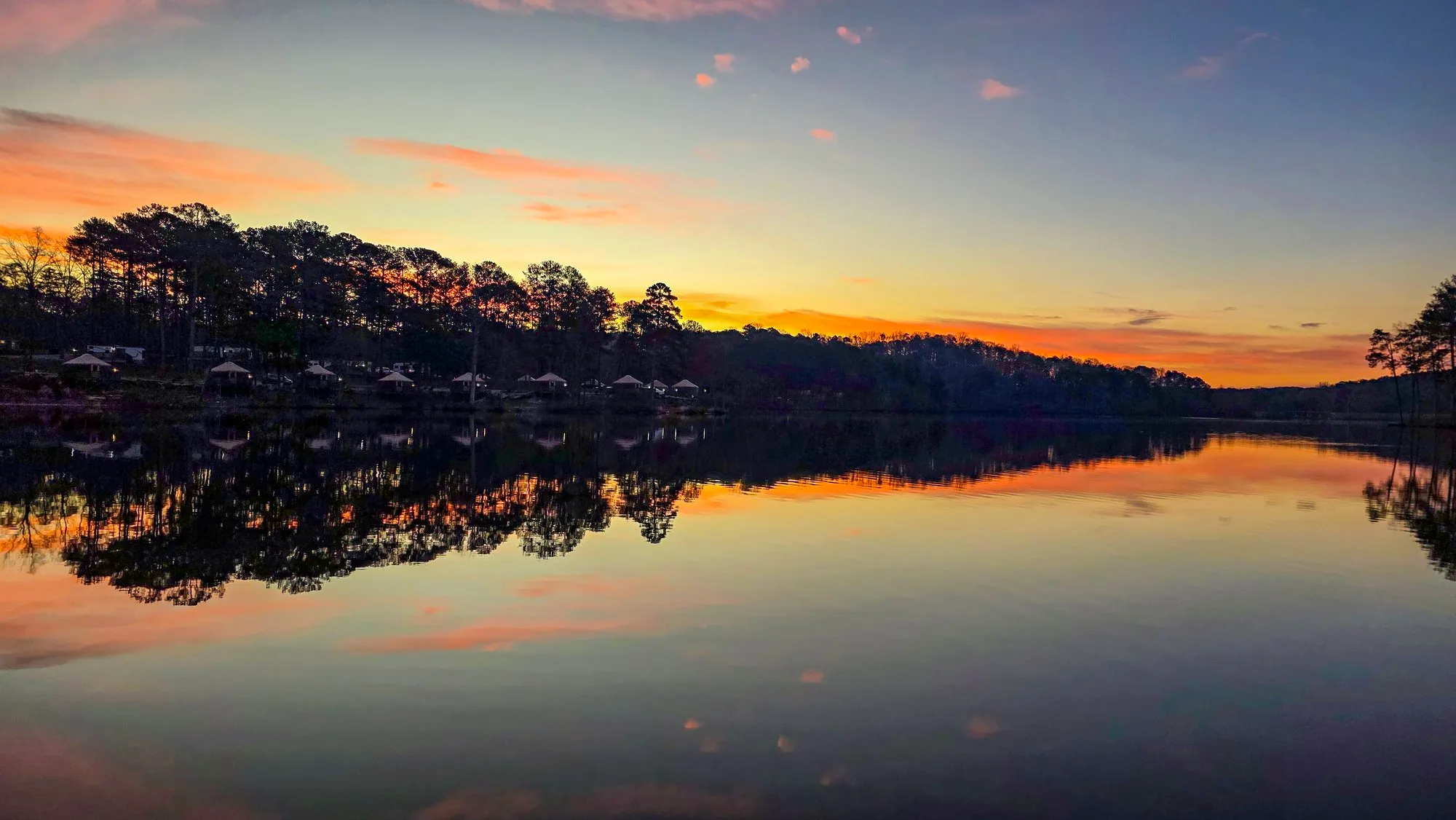
I stop a lot, mostly for photographs at the water. On winter walks I stood still for a median of 24 minutes (anywhere from 7 to 53). Standing still is when a damp base layer turns cold, and my sunrise stop comes at the coldest part of the walk.
Two habits
- Open up at the first sign of warmth, before the sweat starts. Unzip, pull the beanie, push up the sleeves.
- Put a layer back on before you stop, not once you are cold.
The top
On the Cherokee Trail itself I often need none of it: no beanie, no gloves, sometimes not even the vest. The top of the mountain is different. It is bare granite, a lot windier, so a lot colder, and the wind chill up there is brutal. That is when the vest, the beanie and the gloves go on; the hoodie is back in the car by then.
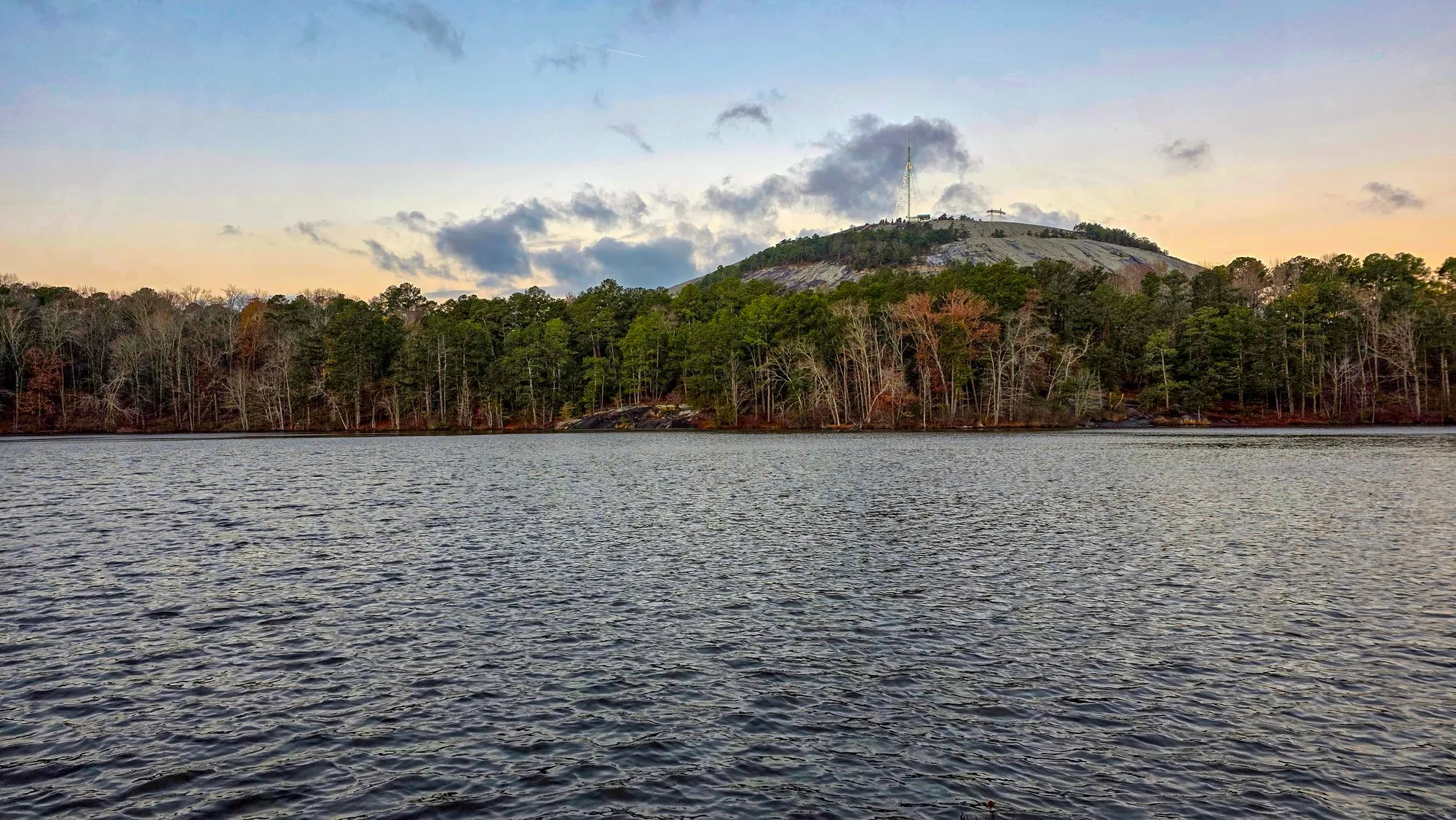
It is also where the whole problem comes together. The top sits about 850 feet above the lowest point of the walks that reach it, and most of that is one climb, so I arrive warm and damp at the one place with no shelter from the wind. I went to the top on 41 of my 119 recorded sunrise walks, 6 of them in winter.
The Weather Service’s wind chill formula puts 35°F in a 20 mph wind at 24°F.28 What I cannot give you is the wind on top on a given morning. The weather archive’s wind is for a whole grid square, measured as if about 33 feet over open ground, and across my summit walks it read a median of 5 mph, which is nothing like it feels up there. So this part is my experience, not a measurement.
My rules by temperature
These are mine, set by someone who runs hot. If you run cold, move every line up; the order is the part worth keeping.
- Above 40°F: shorts and a T-shirt.
- Around 40°F: the vest and the beanie go on.
- Under about 35°F, or when it is windier than usual: the glove liners, and the hoodie for the first loop.
- Below freezing: long pants, always the Icebreaker Shifters.
- Going to the top: the vest, the beanie and the gloves, even on a morning when the trail below did not need them.
By that rule, 20 of my 31 logged winter sunrise mornings were shorts weather, 5 called for the vest and beanie, 1 for the gloves and hoodie as well, and 5 for long pants. Across the whole year, 144 of 160 were shorts mornings. That is my rule applied to the temperature at sunrise on each morning I was out, not a record of what I actually wore; that record starts this winter.
What I wear
Everything here is something I wear. I bought most of it, some of it was a gift, and none of it came from a brand. None of it is tested the way a review tests things: it is what I reach for. Each piece has its own card on the gear page.
The Amazon links below are affiliate links: the site earns a commission on qualifying purchases. The affiliate disclosure says how, and what it does not change.
- MERIWOOL merino beanieOn at about 40°F, and for the top.Amazon
- Skechers Hoodless HoodieFor the loop around Indian Island on a cold morning; by the time I am back at the car I am warm, and it stays there.Amazon
- Columbia Steens Mountain vestOn at about 40°F. On the worst mornings it goes over the hoodie to keep my core warm.Amazon
- Merino.tech merino T-shirtMy base layer. I have bought many since the first one.Amazon
- MERIWOOL merino glove linersUnder about 35°F, when it is windier than usual, and for the top.Amazon
- NORTHYARD running shortsUntil it drops below freezing.Amazon
- Icebreaker Merino 200 Shifter pantsAlways, once it is below freezing.Amazon
- Smartwool Active BriefAmazon
- Darn Tough Hiker Quarter socks, midweight cushionAmazon
- MANSCAPED The Crop PreserverAgainst chafing.Amazon
This winter’s record
From this fall on, my morning notes say what I wore. By spring this post will show every winter morning’s start temperature beside what I had on.
How the numbers were made
- A morning counts when I was out at sunrise: a recorded walk that started no later than an hour after sunrise, or a photo-only morning with a frame within an hour of sunrise. Winter is December to February.
- Temperatures come from the Open-Meteo weather archive at my sunrise spot, a weather model’s grid (ERA5 and ECMWF IFS), not a thermometer on the trail. The season numbers use the archive’s hour nearest sunrise. The walk numbers read its hours around each walk, in a straight line between the hours either side of the start and of the end.1
- “Feels like” is the archive’s apparent temperature, which combines wind chill, humidity and sunshine.1
- Standing still is a recording’s elapsed time minus its moving time, where moving means faster than about 0.6 mph.
- The island loop starts at the lot on Indian Island: the minutes until the recording leaves the island for a minute or more, measured against the island’s outline from OpenStreetMap, and whether it came back within about 160 feet of its first point before it left.
- A walk reached the top when its recording climbed past about 1,610 feet; the summit is about 1,686.
- Every number on this page is computed from the log each time the site is built, so it moves as mornings are added.
Where the Facts Come From
The Sources
- Historical Weather API documentation, Open-Meteo (the apparent temperature combines wind chill, relative humidity and solar radiation; ERA5 and ECMWF IFS behind the archive)
- Winter Layering 101, Appalachian Mountain Club, J. O'Connell and T. Mudie, October 16, 2025 (the Be Bold, Start Cold section; cotton kills; base, mid and shell layers)
- TB MED 508, Prevention and Management of Cold-Weather Injuries, Headquarters, Department of the Army, April 1, 2005 (para 2-4 on sweating in clothes chosen for rest; para 3-2 on layers kept cool to comfortable, the three-layer system with a synthetic inner layer, and a wet uniform losing 50 percent or more of its insulation; USARIEM says a revision is under way)
- Chemistry WebBook: saturation properties of water, NIST (heat of vaporization 2,430 kJ/kg at 30°C; also Baker LB, Physiology of sweat gland function, Temperature 2019;6(3):211-259, 580 kcal per kg of evaporated sweat)
- Impact of wet underwear on thermoregulatory responses and thermal comfort in the cold, Bakkevig MK, Nielsen R. Ergonomics 1994;37(8):1375-1389 (wet underwear cooled resting subjects at 10°C; equally wet, thickness mattered more than fiber)
- Wet military uniforms pose low risk of hypothermia while static in mild cold air, Seeley AD et al. Appl Physiol Nutr Metab 2024;49(12):1763-1772 (12 adults, 60 minutes at 5°C; fingers cooled about 20 to 23°C)
- TRI 3020, Wicking Windows technical bulletin, Cotton Incorporated, 2006 (Table II: untreated cotton jersey absorbed 3.89 g of water per g of fabric)
- Thermal and Moisture Management Properties of Knitted Fabrics for Skin-Contact Workwear, Vasile S et al. Materials 2025;18(8):1859 (polyester knits dried in under 9 minutes, cotton in 10 to 18, a wool and nylon knit in over 24; also Hassan MM and Leighs SJ, Drying Technology 2017;35(5):585-592)
- Chemistry WebBook: water at 1 atm, NIST (thermal conductivity 0.598 W/(m K) at 20°C; air 26.35 mW/(m K) at 300 K, Lemmon and Jacobsen, Int J Thermophysics 2004)
- Non-evaporative effects of a wet mid layer on heat transfer through protective clothing, Bröde P, Havenith G, et al. Eur J Appl Physiol 2008;104(2):341-349 (conduction through the wet layer alone cut insulation 9 to 16 percent; evaporation mattered more)
- Preventing Hypothermia, CDC, August 25, 2026
- About Common Cold, CDC, February 19, 2026
- Cold exposure impairs extracellular vesicle swarm-mediated nasal antiviral immunity, Huang D, Taha MS, Nocera AL, Workman AD, Amiji MM, Bleier BS. J Allergy Clin Immunol 2023;151(2):509-525 (cultured nasal cells and surgical tissue at 32°C against 37°C, not infections in people)
- Acute cooling of the feet and the onset of common cold symptoms, Johnson C, Eccles R. Family Practice 2005;22(6):608-613 (180 volunteers; self-reported symptoms, P = 0.047)
- Debunking the Myth of Wool Allergy, Zallmann M et al. Acta Derm Venereol 2017;97(8):906-915
- Identification of the physical stimulus and the neural basis of fabric-evoked prickle, Garnsworthy RK et al. J Neurophysiol 1988;59(4):1083-1097 (also Naylor G (CSIRO), Comfortable next-to-skin wool)
- Value and Use of Wool, WOOL 422/522 lecture notes, Wood E, Australian Wool Education Trust and University of New England, 2012 (section 21.3 on the 95 percent comfort factor; Table 21.2 on abrasion, nylon blends and cost)
- Wool Classing, WOOL 422/522 lecture notes, Macpherson S, AWET and UNE, 2012 (breed diameters; carpet wool 30 to 40 microns)
- What is the Wool Fibre?, The Woolmark Company
- Base layer guide, Icebreaker (MerinoFine at 15.5 and 17.5 microns)
- CAN/CGSB-4.2 No. 0, Table 1: commercial moisture regain values, Canadian General Standards Board, from ASTM D1909-96 (wool 13.6; cotton yarn 7.0 to 8.5; polyester 0.4)
- Fiber Hygroscopicity and Perceptions of Dampness, Part II, Li Y, Plante AM, Holcombe BV. Textile Research Journal 1995;65(6):316-324
- Effect of Wool Components in Pile Fabrics on Water Vapor Sorption, Heat Release and Humidity Buffering, Gibson PW (US Army Natick). J Engineered Fibers and Fabrics 2011;6(1)
- Odor Intensity in Apparel Fabrics and the Link with Bacterial Populations, McQueen RH et al. Textile Research Journal 2007;77(7):449-456
- Clothing impact on post-exercise comfort: skin-clothing physiology in transient environment, Abedin F, DenHartog E. Ergonomics 2024;67(8):1080-1096 (12 men at 15°C; funded by Australian Wool Innovation)
- Merino 150 (Core Spun), Smartwool (also Icebreaker's guide to underwear, on Corespun)
- Each piece's own Amazon listing, read September 26, 2026 (the Fabric type row and the description; each is linked from the kit list above)
- Wind Chill Chart, National Weather Service (the formula, defined at or below 50°F with wind above 3 mph; 35°F in a 20 mph wind gives 24°F)