
What I Carry/Feet
561 miles. That's how far my Cascadia 18s went before I retired them: 80 mornings on the trail over 17 months, nearly all of them at Stone Mountain. Brooks says its running shoes are good for 300 to 500 miles, so these went past that. And I didn't retire them on a hunch. I measured the tread against a pair that has barely been worn, and the numbers and photos are below.
In the Log
How Long They Lasted
561 miles across 80 logged mornings, the sum of the tracks inside the window and nothing more. 13 of the 76 weekends in the window have no morning in the log, so the real figure is higher and unknown. Used, not tested.
Brooks states 300 to 500 miles for its performance running shoes; this pair retired at 561 miles in the log.
Morning by Morning
Miles Add Up
One dot per logged morning at its running total, the dashed line the day the pair retired. Hover a dot for the date; click it for the morning.
Retired
Why I Retired Them
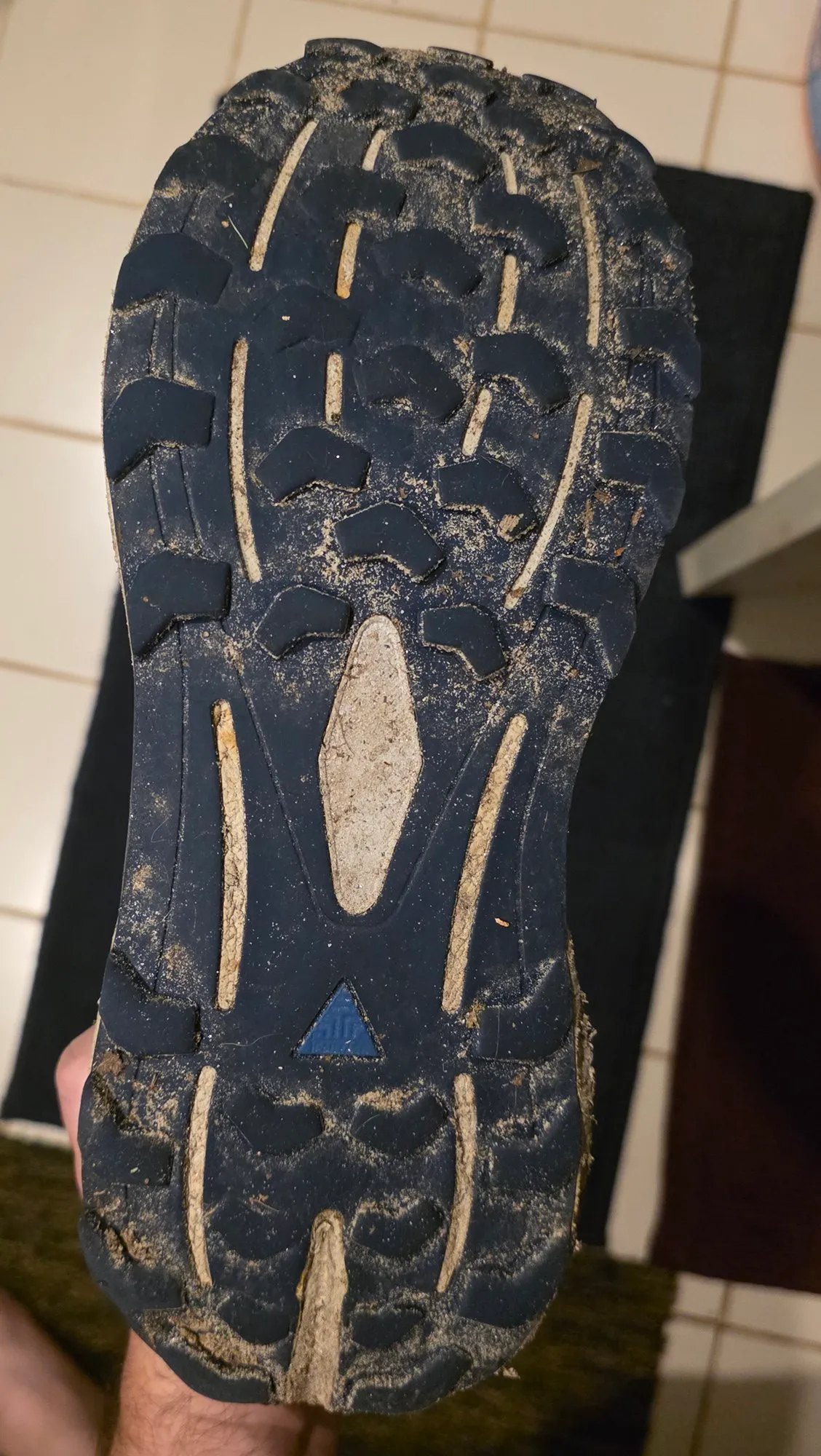
These never felt worn out on my feet. What gave them away was the tread going flat and the lining at the back of the heel wearing through. So I measured five lugs on each shoe with calipers and the same five on a second pair of Cascadia 18s, then checked the heel and the flex by hand.
The second pair is the same shoe in the same size and colors. I bought it in October 2025 for golf and have played about a dozen rounds in it, mostly riding in a cart and walking on grass, so its tread has barely been used. The Cascadia 19 has a different outsole, so the golf pair is the fair comparison.
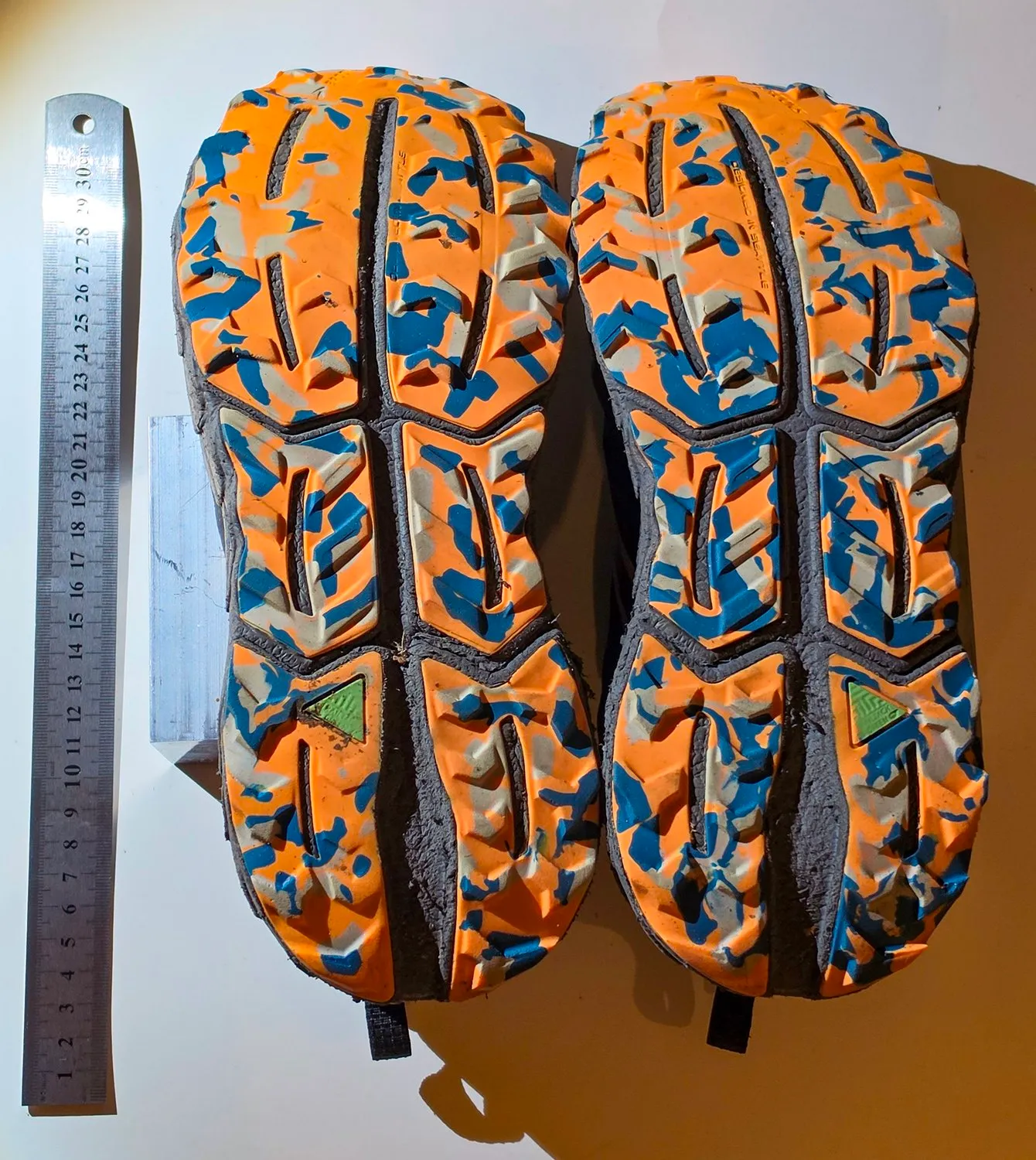
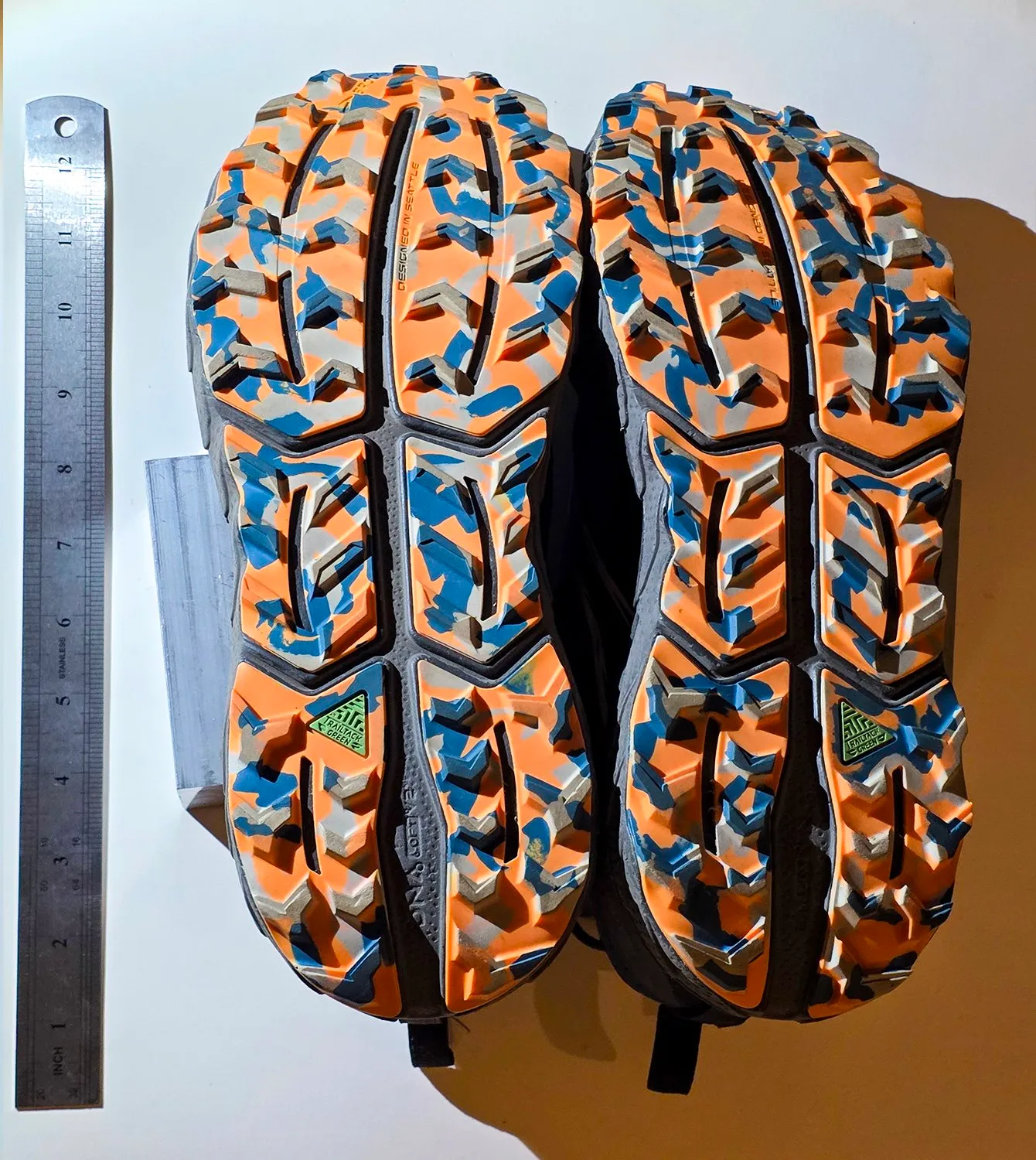
| Spot | Left shoe | Right shoe |
|---|---|---|
| 1 Toe tipGolf pair 3.75 mm | 19% 0.7 mm | 16% 0.6 mm |
| 2 Under the big toe jointGolf pair 3.65 mm | 60% 2.2 mm | 60% 2.2 mm |
| 3 Under the little toe jointGolf pair 3.35 mm | 42% 1.4 mm | 63% 2.1 mm |
| 4 Heel, outside edgeGolf pair 3.55 mm | 59% 2.1 mm | 54% 1.9 mm |
| 5 Heel, inside edgeGolf pair 3.8 mm | 53% 2.0 mm | 63% 2.4 mm |
Measured on November 26, 2026, at the lugs ringed above, with the depth rod of a pair of calipers: its end resting on top of a lug, the rod run down to the rubber at its foot. Every lug was read twice, and the second reading matched the first every time. Each share is this pair's reading over the golf pair's average at the same spot, so 100 percent, the tick on each bar, is the golf pair's tread. Orange marks a reading at about half or less (55 percent and under).
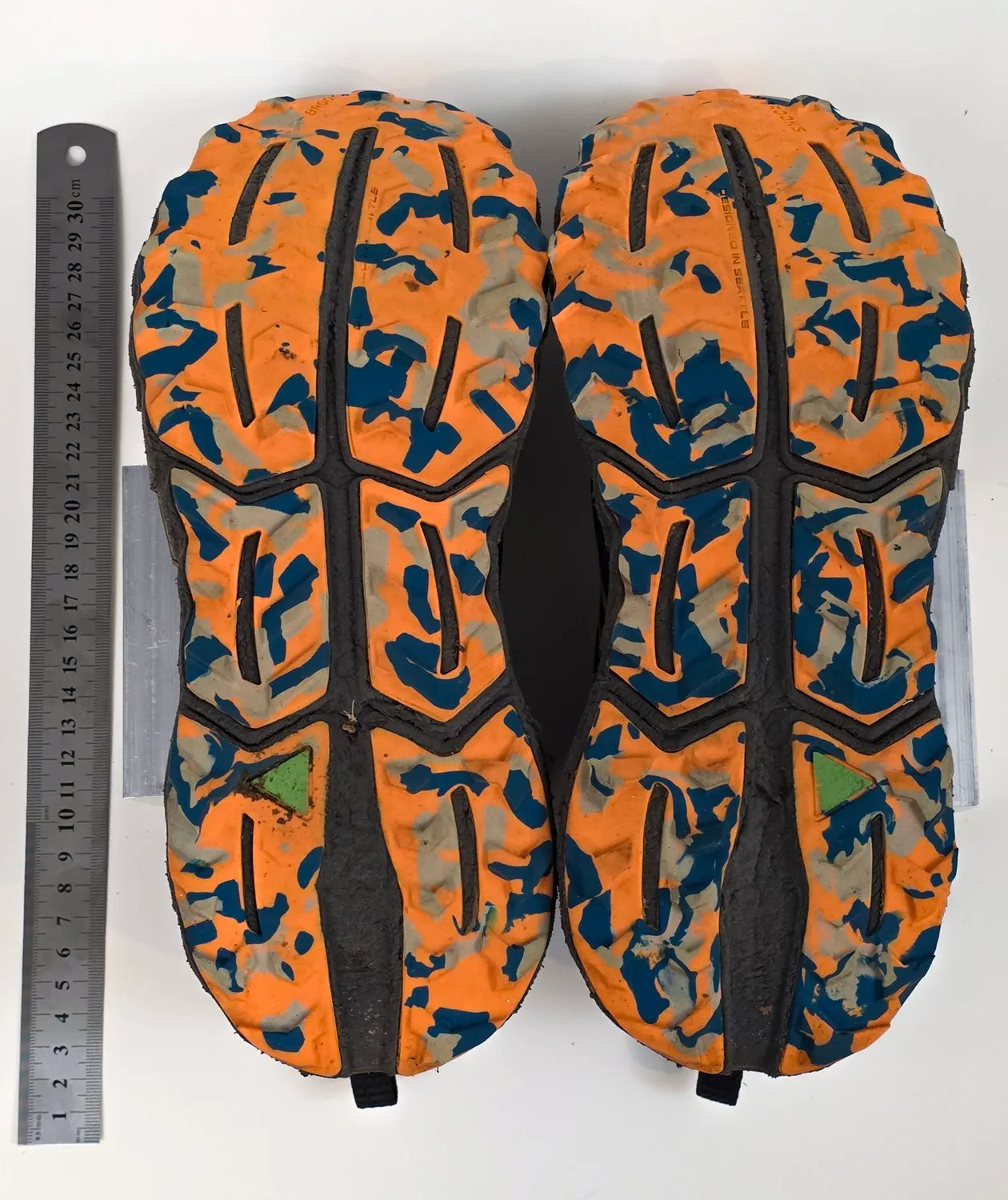
Hiking pair. Both pairs from above, a ruler beside them. The golf pair's lugs still have their corners; on the hiking pair they are rounded off, flattest at the toes.
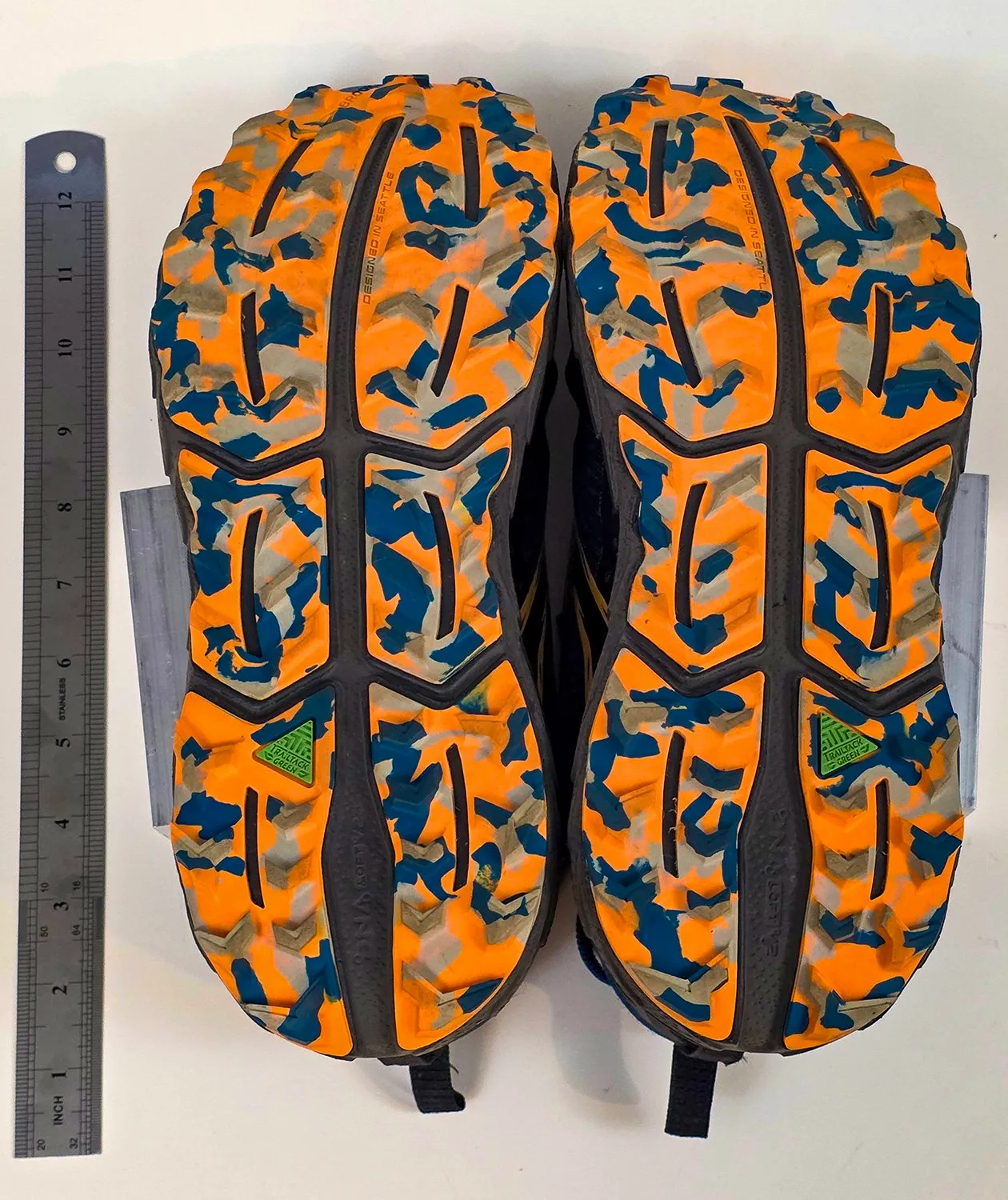
Golf pair. Both pairs from above, a ruler beside them. The golf pair's lugs still have their corners; on the hiking pair they are rounded off, flattest at the toes.
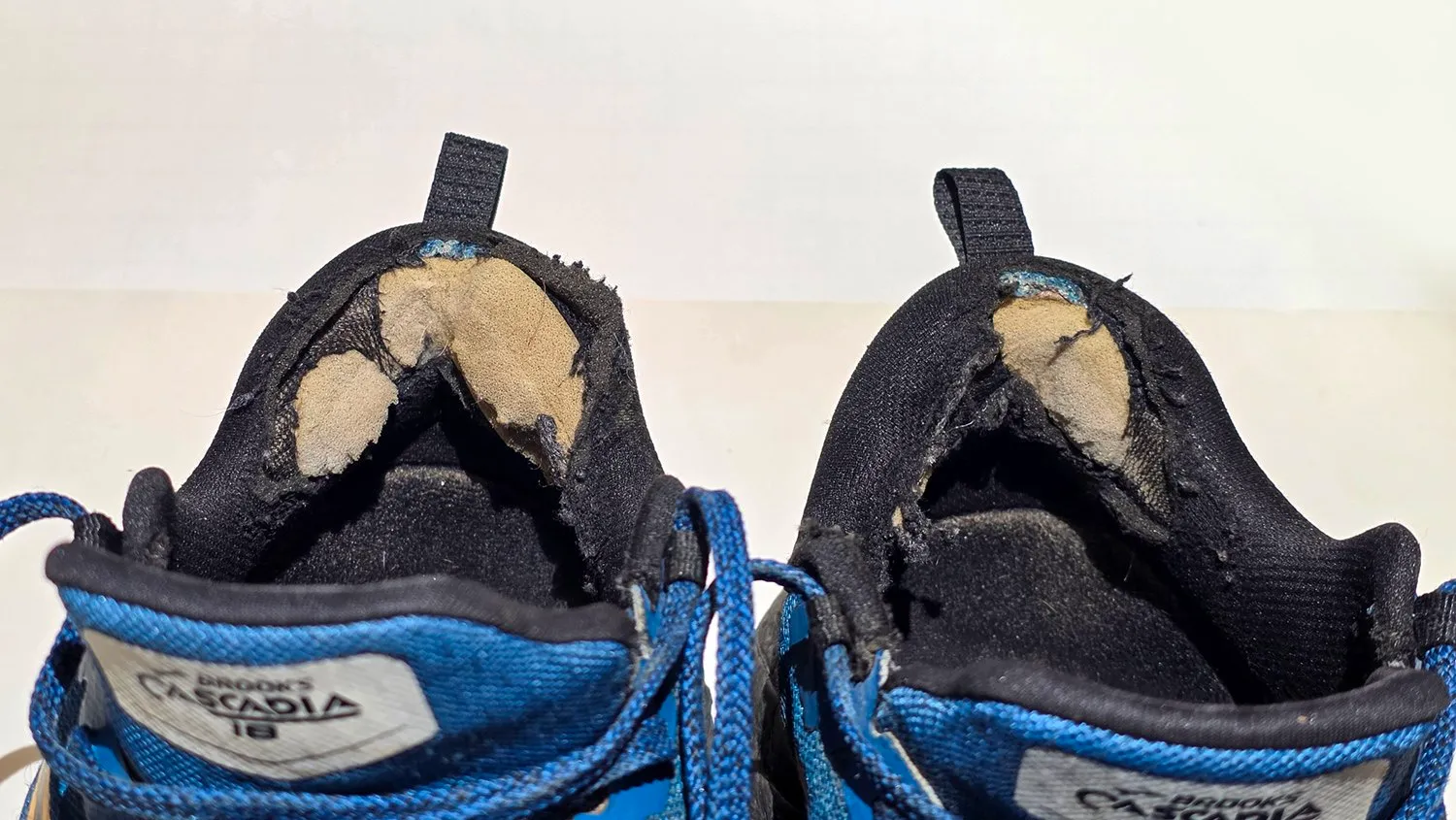
Hiking pair. Inside the heel. The lining is worn through to the foam on both hiking shoes and whole on the golf pair.
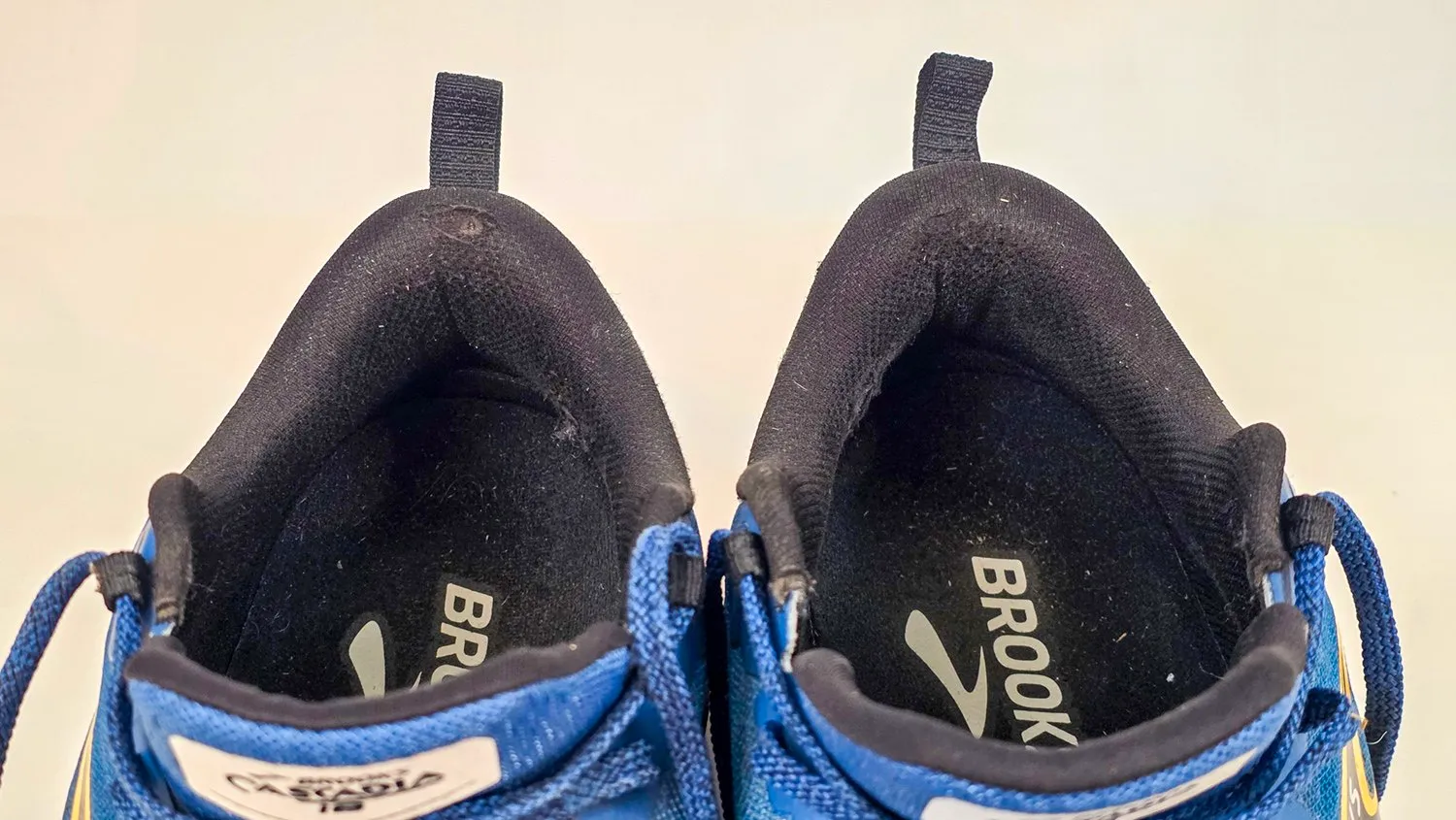
Golf pair. Inside the heel. The lining is worn through to the foam on both hiking shoes and whole on the golf pair.
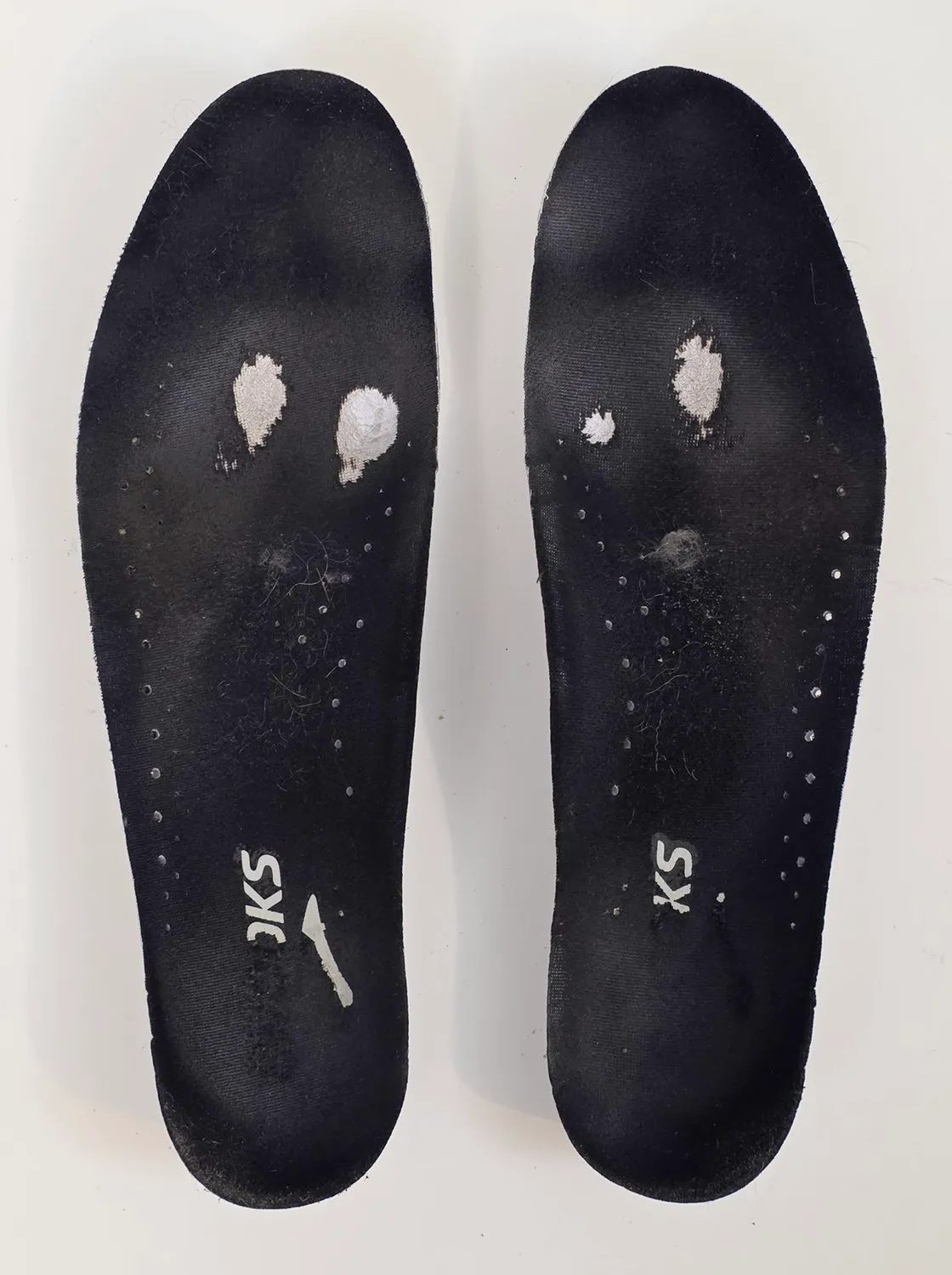
Hiking pair. The insoles, worn through under the ball of each foot on the hiking pair.
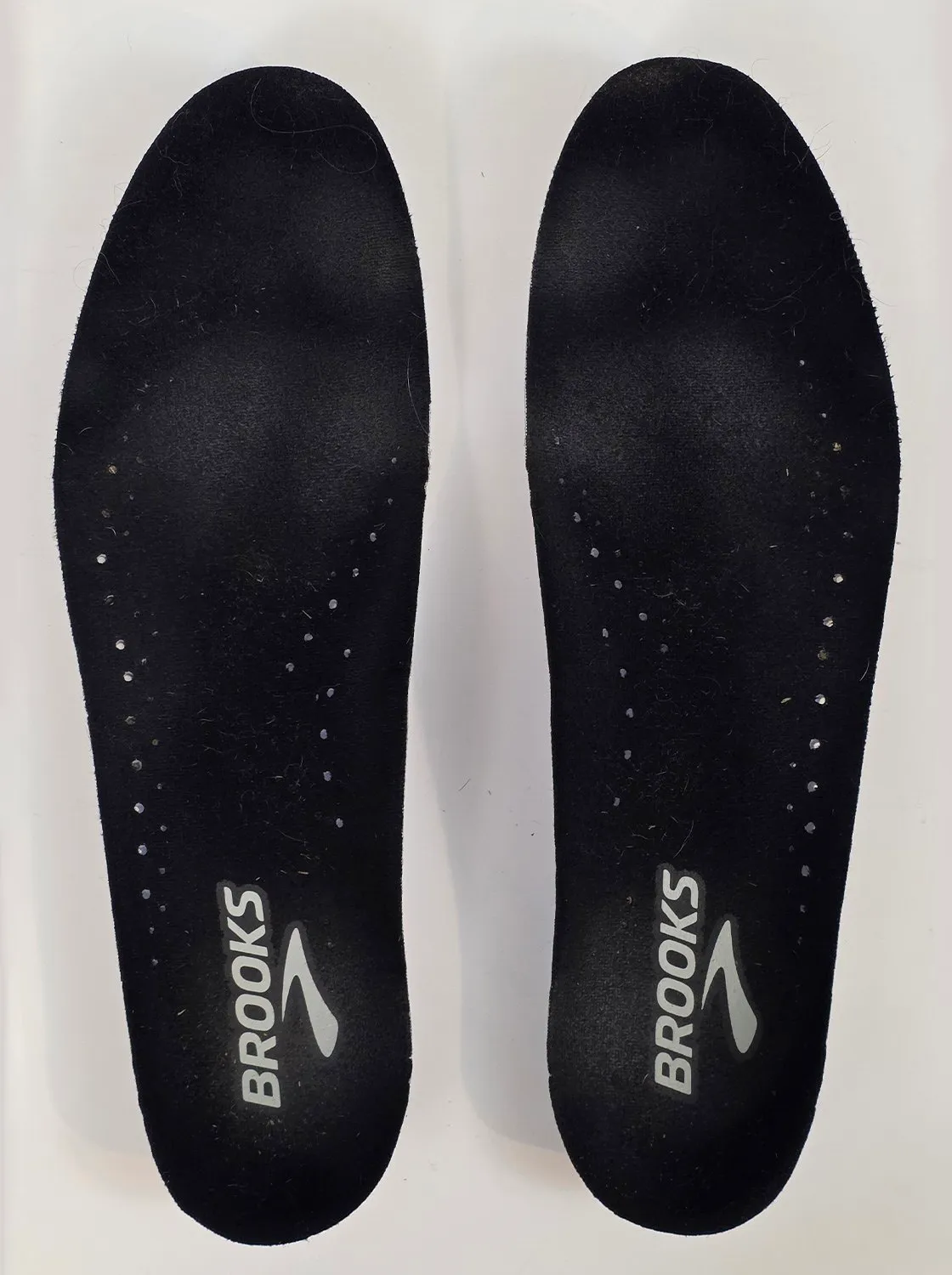
Golf pair. The insoles, worn through under the ball of each foot on the hiking pair.
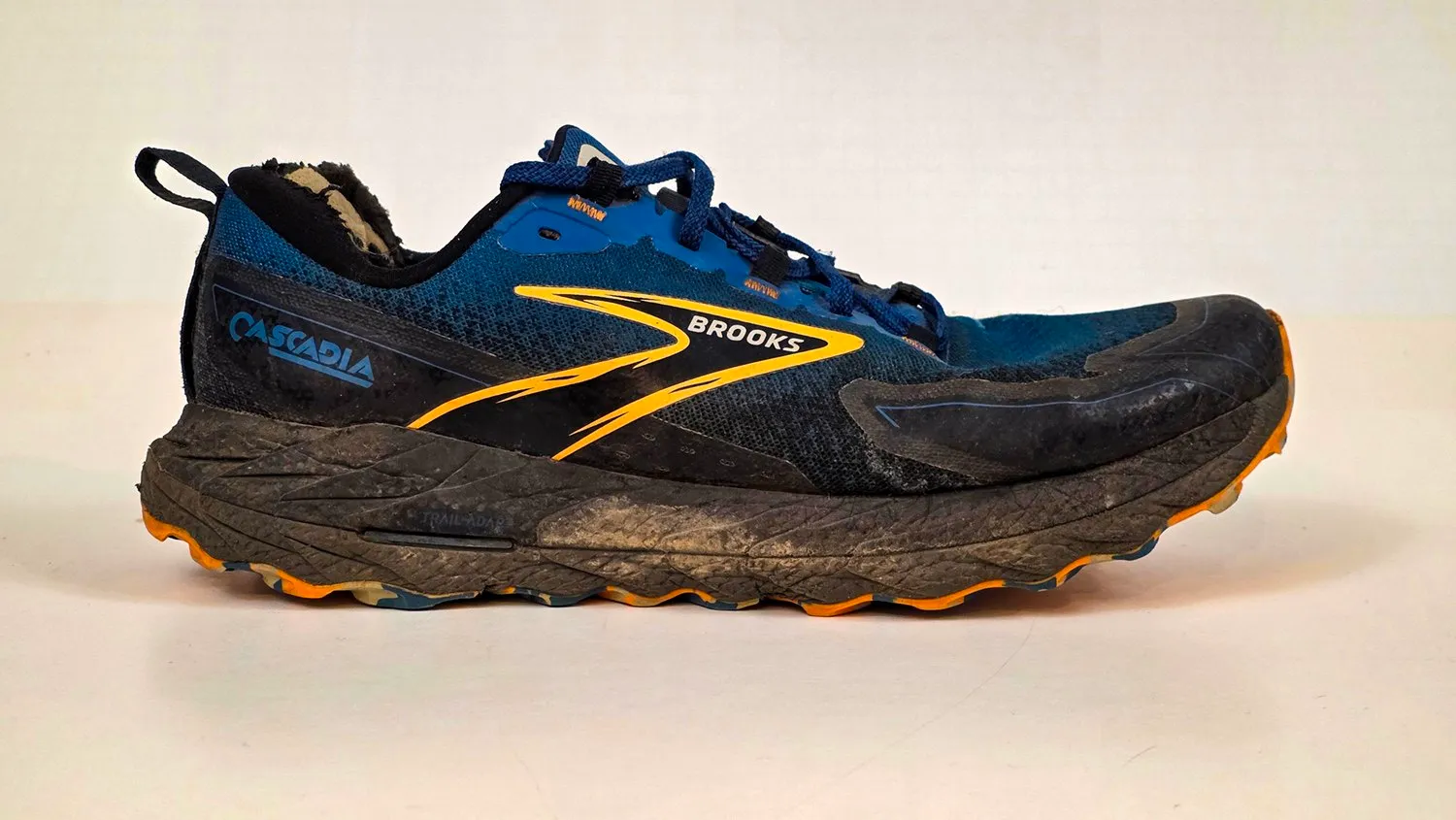
Hiking pair. From the side. The foam along the midsole is creased deep on the hiking pair and still smooth on the golf pair.
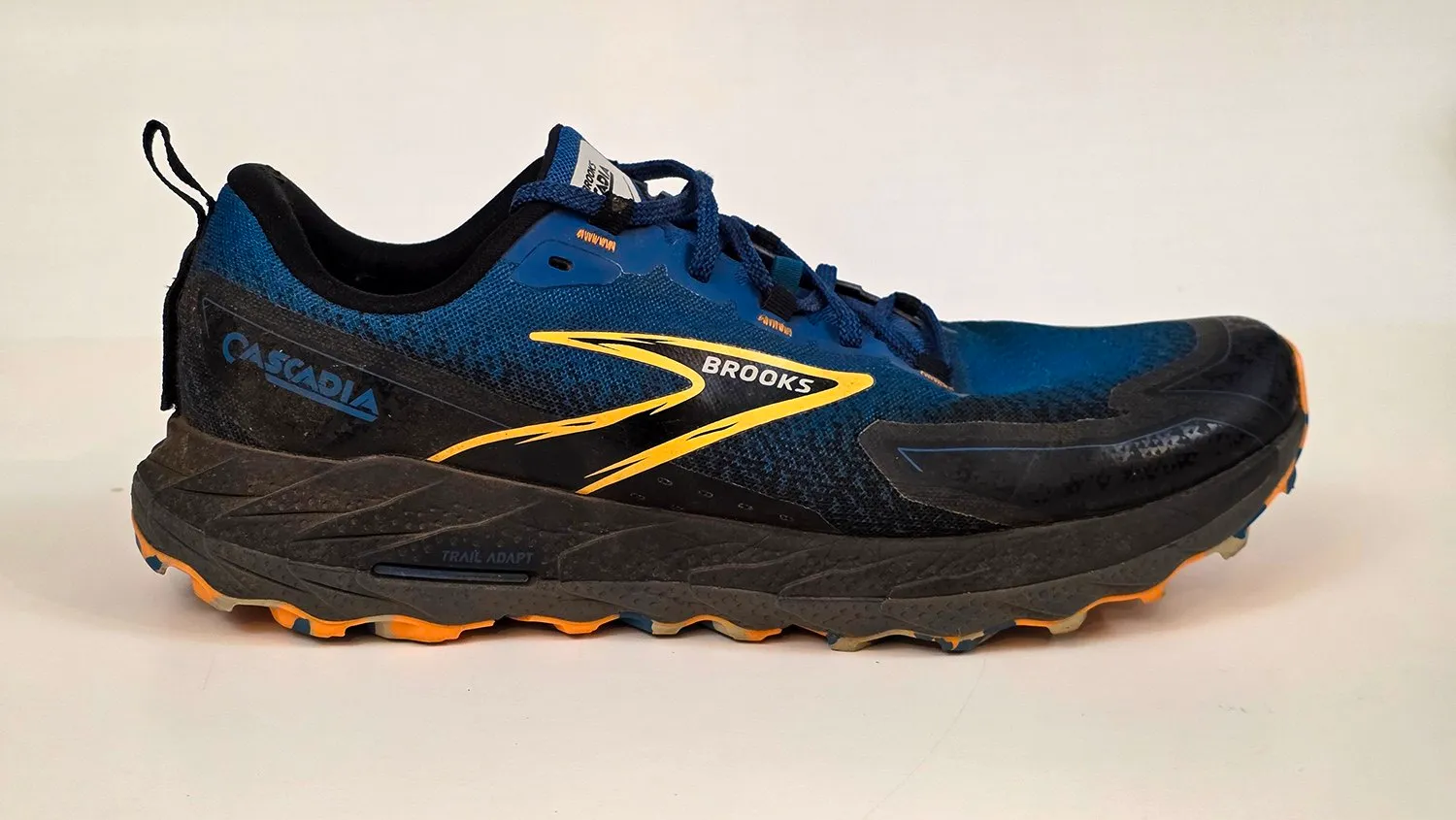
Golf pair. From the side. The foam along the midsole is creased deep on the hiking pair and still smooth on the golf pair.
By Hand
The Call
Retired. My line for a trail shoe is the lugs where I land worn to about half, or a heel cup that folds when I pinch it. Five of these ten lugs are at about half the golf pair's or less, and on average they have 49 percent of its lug left. The toe tips are nearly flat. The heel cup still holds and my feet never complained, so the tread decided it.
Day One
Old Pair, New Pair
Where to Buy
Get a Pair
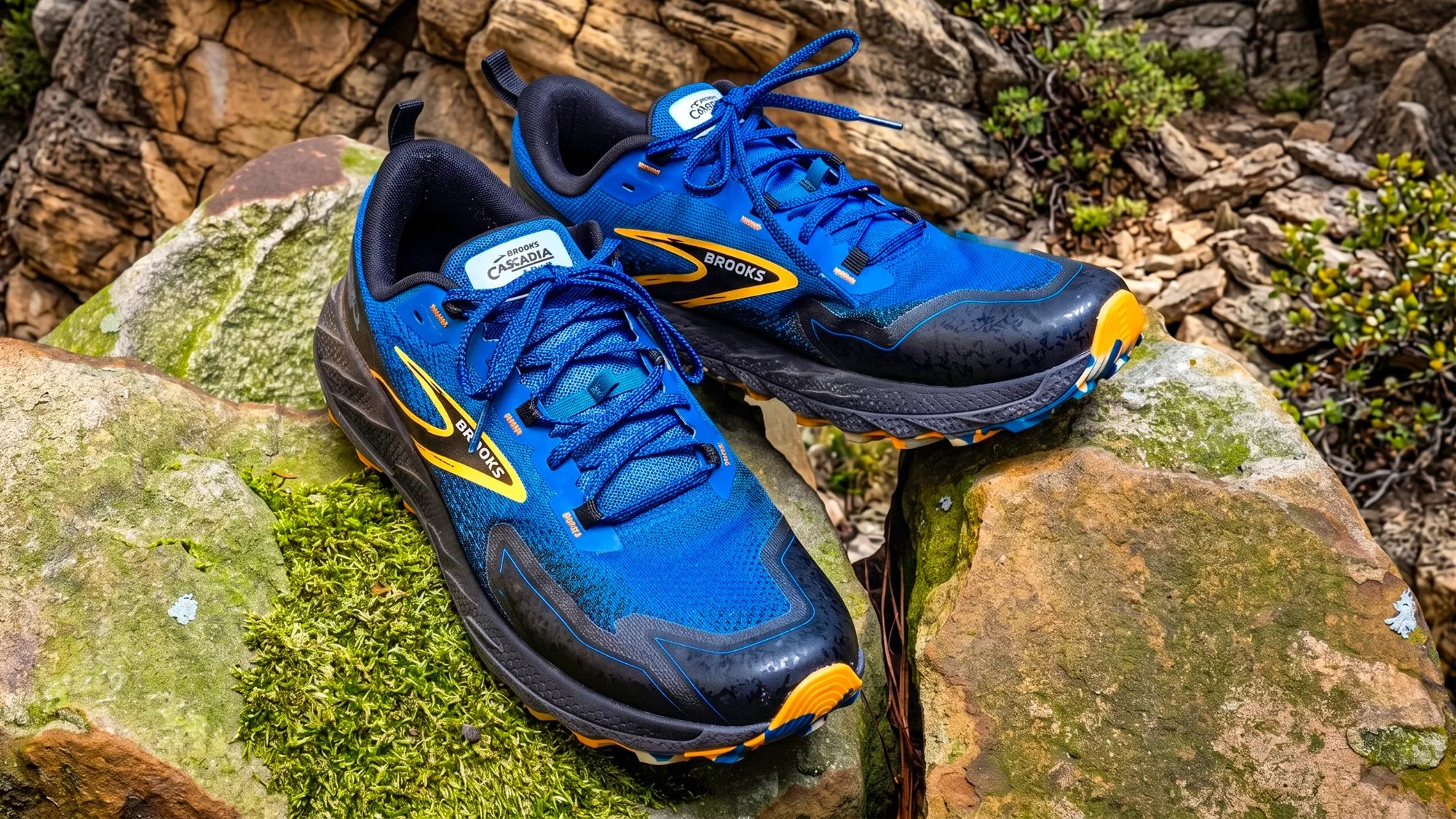
Want to try a pair? The Brooks Cascadia 18 is still on Amazon, though it's an older model now, so sizes and colors come and go.
The Amazon button is an affiliate link: if you buy through it, the site earns a small commission at no extra cost to you. The affiliate disclosure says more.